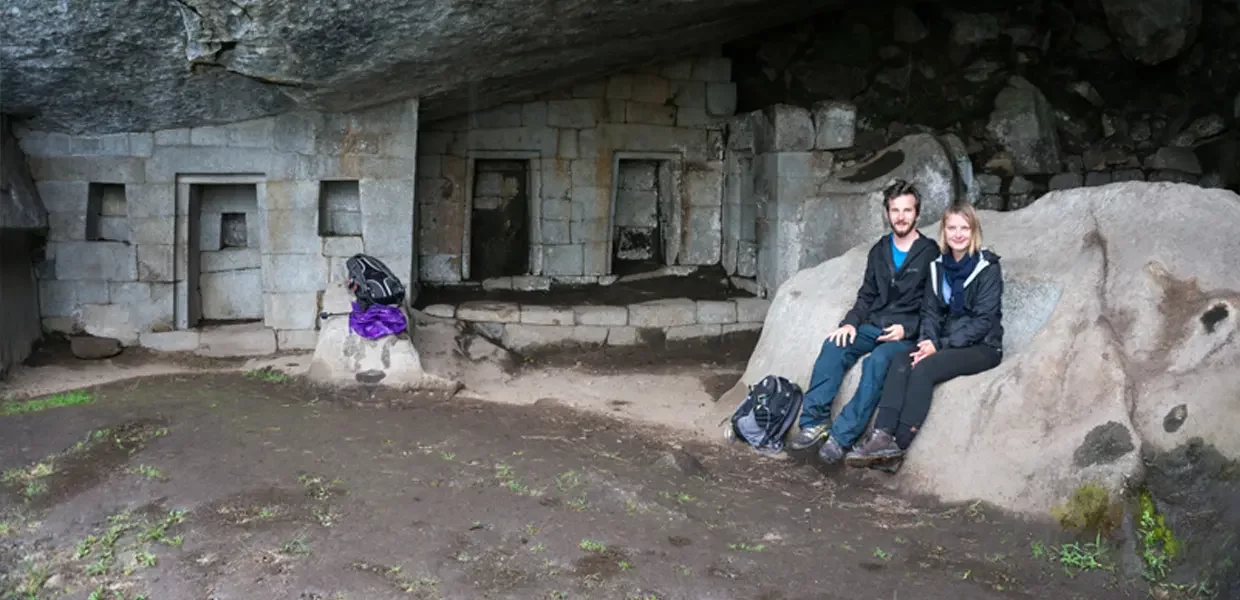
The Temple of the Moon at Machu Picchu is one of the most mysterious and hidden archaeological sites in the entire Inca citadel. Unlike the popular Sun Gate or Temple of the Sun, this sacred cave sits on the far side of Huayna Picchu Mountain and is often overlooked by travelers. Yet for those who make the effort, it offers an experience of silence, reverence, and authentic connection to Inca spirituality.
What is the Temple of the Moon?
The Temple of the Moon is a ceremonial Inca temple carved directly into a natural cave. It features beautifully cut stone altars, benches, and niches, all seamlessly integrated into the rocky overhang. This site is believed to have held religious or funerary functions and possibly honored lunar deities like Mama Killa, the moon goddess in Inca mythology.
Unlike many Inca structures built in the open, this one is partially underground, enhancing its mystical atmosphere and aligning with spiritual traditions that associated caves with the underworld or transitions between realms.
Where is the Temple of the Moon?
This temple is located on the backside of Huayna Picchu, the towering peak behind Machu Picchu in every iconic photo. To reach it, you must hike the Huayna Picchu trail and take a detour that leads down a steep, jungle-covered path to the hidden cave.
The hike adds roughly 1.5 to 2 hours to the standard Huayna Picchu trek and involves stone steps, tunnels, and narrow passages. It is only accessible to travelers with special permits for Huayna Picchu, which must be booked months in advance due to limited availability.
How to Get to the Temple of the Moon at Machu Picchu
To reach the Temple of the Moon, follow these steps:
Purchase a Machu Picchu entry ticket that includes access to Huayna Picchu Mountain.
Enter Machu Picchu during your assigned time and check in for your Huayna Picchu hike.
Begin ascending Huayna Picchu. Halfway up, follow the sign that says “Gran Caverna,” which leads to the Temple of the Moon.
Descend through narrow jungle trails and stone staircases.
Reach the cave, spend time exploring, then either loop back or complete the hike down to the Machu Picchu exit.
The hike is moderately difficult and requires good physical condition. It’s not recommended for travelers afraid of heights or with mobility issues.
Architectural Features
The Temple of the Moon stands out for its architectural complexity within a natural setting. The cave is large, with a tall ceiling and multiple carved sections.
Key features include:
Stone thrones or ceremonial seats
Carved niches likely used for offerings
Smooth stone surfaces blending into raw rock
A central altar at the rear of the cave
Stairs and platforms possibly used during rituals
This unique mix of human craftsmanship and natural space reflects the Inca belief that sacredness lies in harmony with nature rather than domination of it.
Why Is It Called the Temple of the Moon?
The name “Temple of the Moon” was not given by the Incas but rather by modern archaeologists. The cave’s ambiance and its association with darkness, night, and introspection led many to believe it honored Mama Killa, the Inca goddess of the moon. While there is no definitive proof of this purpose, it remains a plausible interpretation given the Inca devotion to lunar cycles and celestial bodies.
The moon played an important role in Inca agriculture, calendars, and ceremonies. The Incas even used the moon to track time and balance the powerful sun deity Inti with a feminine counterpart.
Who Used the Temple of the Moon?
Given the site’s remote location and refined stonework, archaeologists believe it was reserved for elite members of Inca society. Likely users include:
Some researchers suggest the site may have served as a funerary chamber, spiritual retreat, or initiation site for Inca leaders. It may also have been used seasonally for rituals related to lunar cycles or harvest ceremonies.
Best Time to Visit the Temple of the Moon
The best time to visit Machu Picchu and hike to the Temple of the Moon is during the dry season, which runs from May to October. During these months, the trail is less slippery, visibility is better, and there is a lower risk of closures.
In contrast, the rainy season from November to April brings heavy showers, muddy paths, and potentially dangerous trail conditions. The temple is still accessible if weather permits, but it is less enjoyable and more physically demanding.
Tips for Visiting the Temple of the Moon
Here are a few essential recommendations to make the most of your visit:
Book early: Huayna Picchu permits are limited and sell out months in advance.
Wear sturdy footwear: the trail is steep and rocky.
Acclimate in Cusco or the Sacred Valley before your hike.
Bring water and snacks: The hike takes several hours, and there are no services on the way.
Hire a guide: Many of the temple’s details are easy to miss without expert interpretation.
Why Visit the Temple of the Moon?
While most visitors to Machu Picchu stay within the main circuit, those who venture to the Temple of the Moon enjoy a more tranquil, meaningful experience.
Here are reasons to include it in your itinerary:
Discover a hidden gem few travelers see
Escape the crowds for a quiet, spiritual moment
Explore a rare example of Inca cave architecture
Deepen your understanding of Inca cosmology
Enjoy a rewarding adventure through jungle trails
If you are passionate about ancient cultures, sacred sites, or simply love off-the-beaten-path exploration, the Temple of the Moon will enrich your journey.
Temple of the Moon vs. Other Temples at Machu Picchu
Let’s compare the Temple of the Moon to other sacred structures in the citadel:
Temple of the Moon
Hidden in a cave on Huayna Picchu
Built into natural rock
Limited access, requires special permit
Possibly lunar or funerary use
Temple of the Sun
Located in main Machu Picchu sector
Semi-circular tower with fine stonework
Used for solar ceremonies
Easily accessible with standard ticket
Principal Temple
In the Sacred Plaza
Monumental trapezoidal walls
Likely a general ceremonial center
Part of every main circuit tour
Each site reflects different aspects of Inca religion—solar worship, death and transition, or general ritual—but the Temple of the Moon is the most secluded and mysterious.