Hello, traveler!
The team at Cusco-Explore prepared this article especially for you. If you’re planning a visit to Sacsayhuaman, here you’ll find everything you need to know—how to get there, the meaning of its name, its rich history, updated ticket prices, and expert tips to make the most of your experience.
From its impressive architecture of gigantic stones to its importance as a ceremonial and military center of the Inca Empire, this site will leave you speechless.
So, make yourself comfortable and get ready—we’re about to uncover all the secrets of this monumental place.
And without further ado… let’s begin!
What is Sacsayhuaman?
Sacsayhuaman Is One of the Most Impressive Archaeological Sites in Peru. This ancient Inca fortress, located in the highlands of Cusco, is one of the most iconic constructions left by the Inca civilization
It’s a brilliant example of advanced engineering and architectural mastery, showcasing the ingenuity and power of the Inca Empire.
Its massive stone walls, some weighing between 90 and 125 tons, continue to amaze modern-day architects and archaeologists. Despite being partially destroyed during the Spanish conquest, what remains is a breathtaking testament to the skills of ancient Andean builders.
Where Is Sacsayhuaman Located?
Sacsayhuaman is located just 3 kilometers (1.9 miles) from Cusco’s main square, perched on a hill overlooking the city.
The site is easily accessible and offers one of the most stunning panoramic views of Cusco, especially during sunrise or sunset.
Its elevated and strategic location allowed the Incas to monitor and protect the capital, serving both military and ceremonial purposes.
What Is the Altitude of Sacsayhuaman?
Sacsayhuaman sits at a lofty 3,700 meters (12,139 feet) above sea level.
Due to this high altitude, it’s common for visitors to experience symptoms of altitude sickness—especially if it’s their first day in Cusco.
We recommend spending at least one day acclimatizing in the city, drinking coca tea, and avoiding strenuous activity before hiking up to the site.
What Does Sacsayhuaman Mean?
The name “Sacsayhuaman” comes from Quechua, the language of the Incas, and is most commonly translated as “The Satiated Hawk.”
Scholars believe this name may refer to the bird of prey feasting after battle—possibly symbolizing the site’s military strength and high vantage point, where hawks often circle above.
Others interpret it spiritually, linking it to the Inca worldview where animals like hawks, pumas, and serpents represented divine elements of the universe.
The History of Sacsayhuaman
Construction of Sacsayhuaman began during the 15th century under Inca Pachacuti, the emperor responsible for expanding the Inca Empire and redesigning Cusco into the shape of a puma—considered a sacred animal.
Sacsayhuaman was likely the “head” of this symbolic puma-shaped city. Though originally thought of as a fortress, researchers now believe it also served religious and ceremonial functions—possibly for rituals dedicated to the sun god Inti.
According to Inca Garcilaso de la Vega, a mestizo chronicler of the 16th century, construction required the labor of thousands of men over decades. Each stone was carved to fit perfectly with its neighbors, and many came from quarries several kilometers away.
Interestingly, some historians argue that parts of the site may predate the Inca civilization, suggesting that earlier cultures may have laid the foundation for this masterpiece.
The Architecture of Sacsayhuaman
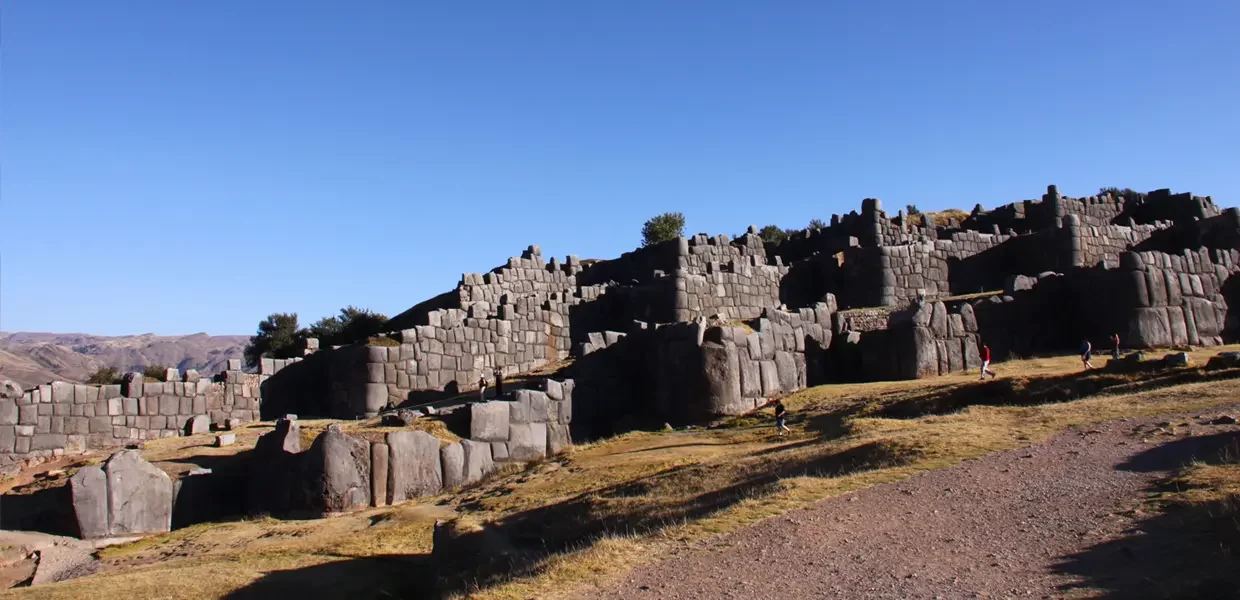
The architecture of Sacsayhuaman is nothing short of miraculous. It features three-tiered zigzagging walls that many believe resemble the teeth of a jaguar or puma—powerful animals in Andean mythology.
What stands out most is the incredible precision with which the stones were cut and assembled.
The walls are made of gigantic limestone boulders, some weighing over 125 tons, yet they fit together so seamlessly without mortar that even a razor blade cannot slide between them.
This technique not only showcases the Inca’s engineering brilliance but also helped the structure withstand centuries of earthquakes that have damaged many colonial buildings in Cusco.
The entire layout of the complex includes open ceremonial spaces, sacred stones, storage facilities, and the remains of towers—one of which may have been used as a solar observatory.
How to Get to Sacsayhuaman?
Getting to Sacsayhuaman is relatively easy:
Walking: Take a 45-minute uphill walk from Cusco’s Plaza de Armas. The trail is steep but scenic, passing by San Cristobal Church and offering beautiful views of the city.
By Taxi: A quick 10-minute ride from the city center will drop you right at the entrance.
Guided City Tour: Most city tours in Cusco include Sacsayhuaman, usually combined with other sites like Qenqo, Tambomachay, and Puka Pukara.
If you enjoy trekking and are well-acclimated, walking is a rewarding option. If you’re short on time or prefer a more relaxed visit, taking a taxi or booking a tour is the way to go.
What to Expect When Visiting Sacsayhuaman
Visiting Sacsayhuaman is a deep dive into the heart of Inca ingenuity and culture.
You’ll walk along the imposing zigzag walls, take in breathtaking views of Cusco, and touch stones that have stood the test of time and empire.
Interpretive signs throughout the site provide useful insights, but for a full understanding of its historical and spiritual context, hiring a local guide is highly recommended.
If you visit in June, you’ll witness Inti Raymi, the Festival of the Sun, which includes a dramatic reenactment of ancient Inca rituals performed right on the grounds of Sacsayhuaman.
What Is the Price to Visit Sacsayhuaman?
There is no standalone ticket for Sacsayhuaman. Entry is only possible with the Cusco Tourist Ticket (Boleto Turístico del Cusco), which also grants access to several other major archaeological sites.
Sacsayhuaman Ticket Prices:
| Ticket Type | Foreign Visitors | Peruvian Citizens | Children (10–17 years) | Children (Under 10) |
|---|
| Boleto Integral (Valid for 10 days, access to 16 attractions) | S/. 130 (Adults) / S/. 70 (Students with ISIC) | S/. 70 (Adults) / S/. 40 (Students) | S/. 70 (Foreigners) / S/. 40 (Peruvians) | Free |
| Boleto Parcial (Valid for 1 or 2 days, for specific circuits) | S/. 70 (Adults) | S/. 40 (Adults and Students) | S/. 70 (Foreigners) / S/. 40 (Peruvians) | Free |
⚠️ Note: Prices may change without notice. It’s best to check with official sources or your tour operator before your visit.
When Is the Best Time to Visit Sacsayhuaman?
The ideal time to visit is during the dry season, from May to September. During these months, you can expect sunny skies, pleasant daytime temperatures, and excellent conditions for photography and walking.
However, if you want to experience the site in all its cultural grandeur, plan your trip around June 24, when Inti Raymi is celebrated. This reenactment of the Inca Sun Festival attracts thousands of locals and international visitors, turning Sacsayhuaman into a stage for living history.