What Is Runkurakay And Why Is It Significant?
Travelers often overlook Runkurakay due to its obscurity among the ruins along the Classic Inca Trail. However, it remains a remarkable ruin steeped in history, concealed in the Andes.
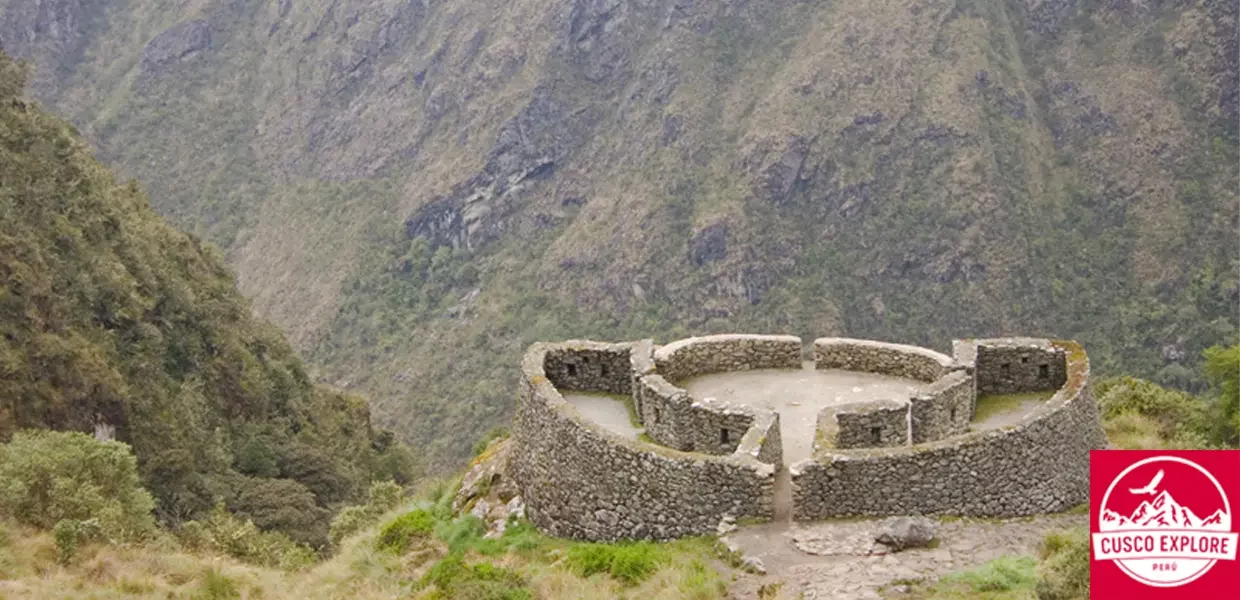
Hikers find its circular, partially restored construction amid the melancholy misty backdrop of the Andes. The structure gives hikers an opportunity to highlight the engineering prowess of the Incas.
Runkurakay may not match the glory of Machu Picchu, but its isolation and geographical location provide an invaluable semblance of the intentions behind the architectural design of Inca cities.
The site stands extremely high within the Cusco region at around 3,760 meters above sea level. It sits atop a small plateau, serving as a resting location and checkpoint for messengers and travelers who voyaged on the network of trails connecting the empire.
The word “Runkurakay” comes from a Quechua word believed to mean “house shaped like a basket,” which likely refers to the form of the building.
Where is Runkurakay located?
Hikers reach Runkurakay on the third day of the Inca Trail, on the trail leading to Machu Picchu, right before the second highest point of the trek—the Runkurakay Sequel Pass.
The incline feels quite steep (and punishing) even for those in decent hiking shape. You collect yourself with views of the cloud forests below, the rocky stone path down the Runkurakay Pass, and then rise to the ancient sites that were sometimes husbanded or just appearing out of the earth.
After exploring that incredible site, hikers from Runkurakay look to the southeast and descend into a valley with so much biodiversity, eventually arriving at Sayacmarca and Phuyupatamarca. From there, clearly they see and appreciate the Runkurakay experience, stopping to consider how the Incas literally embedded their infrastructure across that world-class vertical landscape.
What Is the Historical Context of Runkurakay?
Though smaller than many other archaeological sites, Runkurakay holds historical significance due to its role in the Inca road system.
The Incas placed many types of buildings along the Inca road system, accepting any site that provided accommodation, sustenance, and a view of the route. Historians assume this location to be a tambo (inn)—intended primarily for Inca runners or soldiers.
The architects designed it well. Even though it seems basic today, the rounded walls, interior rooms with separated spaces, and location command respect for the architects and builders of the site.
Runkurakay also holds importance for modern explorers. Hiram Bingham was instrumental in exposing Machu Picchu to the world in 1911, yet during his research of the Andean trails, he passed this site.
Though Bingham did not detail Runkurakay, later archaeologists identified its value within the regional context of its ancillaries in the Urubamba Province.
What Makes Runkurakay Pass Stand Out on the Inca Trail?
Aside from the ruins, Runkurakay Pass marks a significant point on the 4-day Inca Trail, a point each traveler strives to reach. Reaching the pass shows tremendous resilience.
The steep slope and switchbacks to the summit wind through thick flora and fauna quite unique to this range, full of orchids, mosses, and a diversity of native birds.
Once at the top, stop and enjoy the surroundings. Hikers delight in this vantage point, appreciating the vastness of the intricate web of paths below, all stretching south of the Vilcanota range, with many possibly leading to spiritual or agricultural sites that remain undiscovered and concealed under the plants.
How Does Runkurakay Contribute to the Overall Inca Trail to Machu Picchu?
Runkurakay serves as a transitional place on the journey toward Machu Picchu. It represents the journey after the emotional high of Dead Woman’s Pass and before the spiritual tranquility of Phuyupatamarca.
This combination of ascents, ruins, and descents highlights the psychological design of the trail by challenging travelers physically while rewarding them mentally and spiritually.
The physical geography of the site resembles many high ridges and deep valleys of the Inca world, and its location holds meaning—situated between high ridges and deep valleys. Additionally, the view of the Vilcanota River below, searching through the valley, integrates elements of both cosmology and agriculture, with its flow as symbolic as it is physical.
When Visitors Arrive Runkurakay What They Should Expect?
Visitors immediately notice the tranquility upon their arrival. Far fewer people visit Runkurakay compared to the other major stopping points, giving trekkers a moment to inspect the circular compound, hypothesize the use of the ancient site, and appreciate the natural union of earth and stone.
Weather can turn wild. Mist and light rain frequently occur even in the dry season, making proper gear a must.
Fortunately, cloud cover makes the adventure even more mysterious, often causing the site to appear and disappear with the fog.
What are the Best Thoughtful Tips to Prepare for The Experience of the Runkurakay?
If you’re interested in completing the Classic Inca Trail, do some training before your hiking tour. Due to the high altitude and steep inclines, it requires stamina and the ability to acclimatize yourself.
Starting your trip in Cusco for a few days provides a significant advantage to acclimatization, minimizing altitude sickness.
Pack the right layered clothes, water purification tablets, and a walking stick—but most importantly, go at your pace. Runkurakay is not merely a checkpoint on the Inca Trail; it provides an opportunity to sit, ponder, reflect, reconnect as a human being, and appreciate the civilization that carved out right-of-ways across mountaintops.
Closing Thoughts
Runkurakay lacks the prestige of bigger sites, especially because the site remains relatively unaltered, yet it offers a pivotal moment on the Inca Trail expedition.
Its location, history, and quiet composition remind us that quieter, more peaceful ruins deserve the same respect, admiration, and gratitude as more prominent ones.
For travelers seeking more than a destination—those who want to find meaning in the journey, manifest depth in all they do, and appreciate not just the engineering but also the thoughtful attention to emotional involvement behind the structures in which they interact—they won’t want to miss this.
It may not have the recognition of Machu Picchu, but it infuses visitors with the essence of the Andes.