What Is the Cathedral of Cusco and Why Is It Important?
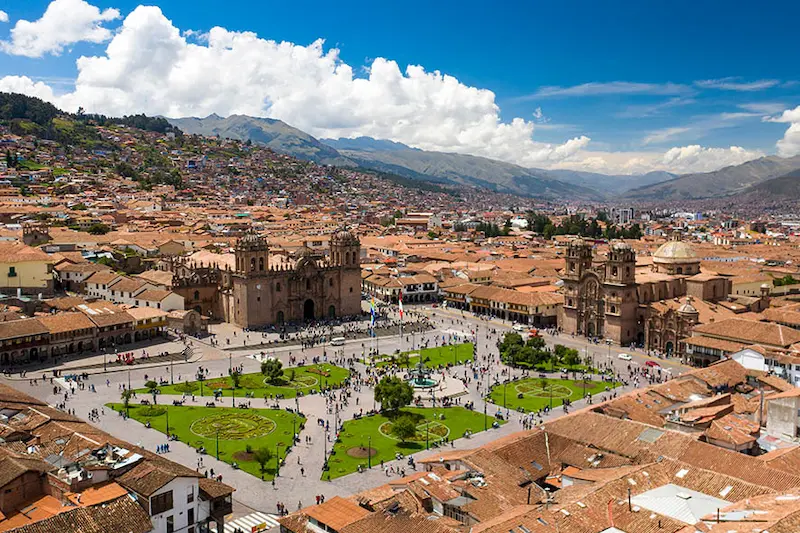
The Cathedral of Cusco, officially named the Cathedral Basilica of the Assumption of the Virgin, rises as one of Peru’s most iconic landmarks. It sits proudly in the historic center of Cusco, dominating the Plaza de Armas with its massive stone facade.
Construction started on August 15, during the early 17th century. Builders used stones taken from the Inca temple of Sacsayhuamán to erect the new symbol of Spanish authority. Over time, it developed into an architectural masterpiece that merges Renaissance styles, Baroque elements, and Andean artistic traditions.
What Can You See Inside the Cusco Cathedral?
The interiors of the cathedral amaze from the moment visitors enter. The central nave stretches under a grand ribbed vault, while gold and silver altars gleam under natural light. More than 400 paintings, many from the famed Cusco School, line the walls.
Among them, Marcos Zapata’s “Last Supper” attracts attention for depicting Jesus sharing a traditional Andean meal, complete with guinea pig. This painting symbolizes the cultural blend between Spanish Christianity and Inca heritage.
Skilled artisans also created carved choir stalls, elaborate pulpits, and delicate wood inlays. Each side chapel reveals unique artistic and devotional expressions, making every corner of the cathedral worth exploring.

What Are the Main Sections of the Cathedral Complex?
The religious complex contains three structures:
The main Cathedral Basilica, which serves as the central worship space.
The Iglesia del Triunfo, the first Christian church built in Cusco, erected over the Inca palace of Viracocha.
The Sagrada Familia, constructed later in the 18th century, stands out for its classical symmetry and sculpted details.
These buildings together showcase how Spanish and indigenous builders created one of South America’s most compelling spiritual centers.
What Makes the Art Collection So Special?
The collection of the Cathedral of Cusco includes priceless religious artworks. Paintings by Diego Quispe Tito, a pioneer of the Cusco School, hang beside works by Marcos Zapata and other colonial-era artists.
Craftsmen filled the cathedral with detailed choir stalls, golden retablos, and silver crosses. Many of these pieces continue to play central roles in events like Corpus Christi, blending visual grandeur with living tradition.
What Is the Significance of the Lord of the Earthquakes in the Cusco Cathedral?
The image of Lord of the Earthquakes, or “Señor de los Temblores,” holds a revered place within one of the chapels. During an earthquake in the 17th century, local people carried the statue through the streets. After the tremors subsided, believers attributed the miracle to divine intervention.
Today, thousands of worshippers still honor the statue in an annual procession that expresses Cusco’s enduring spiritual devotion.

How Does the Cathedral Reflect Cusco’s Cultural Identity?
This cathedral doesn’t just reflect religion—it tells the story of resistance, adaptation, and integration. Builders reused Inca stone to construct Catholic altars, and painters filled canvases with native symbolism.
Such details reveal an extraordinary fusion between Spanish colonization and Andean resilience. The cathedral doesn’t erase Inca culture; instead, it incorporates it into its structure, turning conflict into a shared legacy.
Can You Visit the Cathedral of Cusco?
Yes, the cathedral opens to visitors every day. Tickets can be purchased individually or through a combined tourist pass. Hiring a local guide enhances the experience by explaining symbolic details you might otherwise miss.
Although photography inside is limited, the visual experience remains unforgettable. Many travelers pair this visit with nearby sites like the San Pedro Market or Santo Domingo Church.
When Is the Best Time to Visit the Cusco Cathedral?
Morning hours offer quieter visits and better natural lighting. Special celebrations like Corpus Christi fill the cathedral with music, incense, and colorful decorations. While crowds increase, these events offer a deeper look into local customs.
Visiting during a religious festival also allows travelers to witness the building’s role as an active part of Cusco’s community, not just a tourist destination.
Frequently Asked Questions About the Cusco Cathedral
Where Is the Cathedral of Cusco Located?
The cathedral stands in the Plaza de Armas, the main square in Cusco’s historic center.
What Architectural Styles Appear in the Cathedral?
Expect a blend of Renaissance, Baroque, and native Andean design, visible in everything from facades to murals.
How Does the Cathedral Connect to the Inca Empire?
Spanish builders used stone from Sacsayhuamán and placed the cathedral over Inca ruins, physically merging two cultures.
Which Artists Are Featured in the Cathedral?
Artists like Marcos Zapata and Diego Quispe Tito represent the Cusco School, known for combining Spanish and indigenous themes.
Are the Choir Stalls Open to the Public?
Yes, visitors can admire the choir stalls and their carvings, which show religious figures, local flora, and ornate patterns.