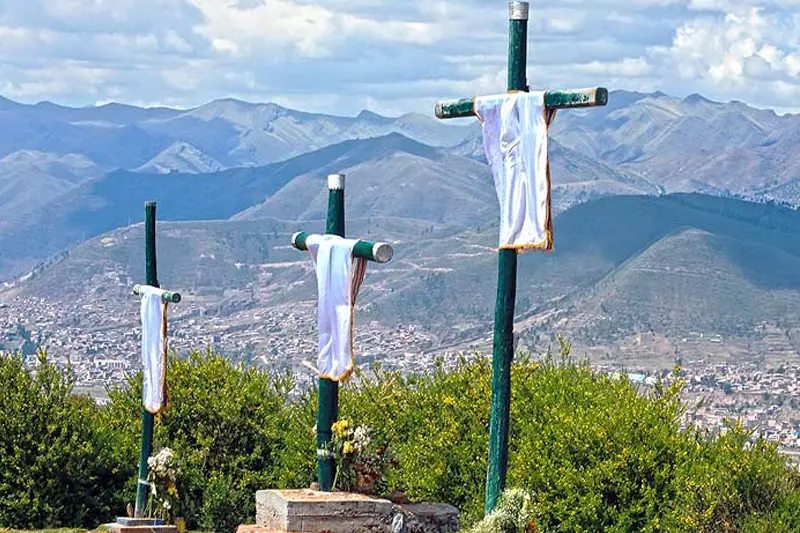
In the highlands of Peru, traditions rooted in faith and community continue to thrive. One of the most meaningful celebrations is the Festival of the Cross Velacuy in Cusco. Taking place every year during the month of May, this event showcases the deep spiritual connection between Andean people and their sacred landscapes. It combines Catholic and Indigenous beliefs, resulting in a powerful cultural expression that reflects centuries of devotion.
What Is the Festival of the Cross?
Known locally as “Cruz Velacuy,” the Festival of the Cross in Cusco is an annual religious and cultural celebration that honors the Holy Cross. The term “Velacuy” comes from the Quechua word “velar,” meaning “to stay awake” or “to keep vigil.”
Significantly, the festival involves the veneration of crosses placed on hilltops, mountains, chapels, and homes. Families and communities gather to decorate these crosses and accompany them with music, candles, food, and flowers.
Origins and Historical Roots
Unlike many modern traditions, the roots of Velacuy trace back to the colonial era, when Spanish missionaries introduced Christianity to the Andean region. Indigenous communities adopted the symbol of the cross, yet integrated it with pre-Columbian rituals that honored sacred mountains, or apus.
Moreover, over time, these practices evolved into a unique blend of Catholic faith and Andean spirituality. This syncretism is most evident during the Festival of the Cross in Cusco, where elements from both worlds coexist in harmony.
When and Where Is It Celebrated?
Traditionally, the festival occurs around May 3rd, though preparations and smaller rituals begin days in advance. Each neighborhood or community often has its own cross, and the celebrations vary slightly depending on local customs.
In Cusco, crosses are typically found in areas such as San Blas, Sacsayhuamán, and various high points surrounding the city. Throughout the region, villagers from the Sacred Valley and nearby towns also take part in the festivities.
The Significance of the Cross
Beyond its religious symbolism, the cross in the Festival of the Cross Velacuy in Cusco represents protection, fertility, and guidance. For many Andean communities, placing a cross on a mountaintop serves as a spiritual safeguard against natural disasters and misfortune.
In addition to Christian prayers, people often make offerings that reflect their agricultural roots—such as coca leaves, chicha, and food. These acts symbolize a plea for abundance, harmony, and health.
Rituals and Processions
Central to the celebration are the night vigils, known as velaciones. During these events, families keep watch over the cross through the night, lighting candles and playing traditional music. The atmosphere becomes both festive and reverent.
Furthermore, during the day, processions take place. Community members dress in vibrant costumes, accompanied by dancers, musicians, and religious leaders. The cross is carried through streets and hillsides, often accompanied by fireworks, brass bands, and heartfelt singing.
Decorations and Offerings
Undoubtedly, one of the most striking aspects of the festival is the intricate decoration of the crosses. Participants adorn them with colorful textiles, flowers, mirrors, and silver ornaments. These embellishments not only express devotion but also highlight the artistic talent of local artisans.
Additionally, the offering tables—known as mesas—display a variety of symbolic items. These include candles, bread, alcohol, fruit, and small religious figures. Each item holds a purpose, rooted in gratitude or supplication.
The Role of the Mayordomos
Importantly, the organization of the festival relies on mayordomos, or community sponsors. These individuals or families take responsibility for coordinating the event each year. Their role includes funding the decorations, food, musicians, and liturgical services.
In return, mayordomos earn social prestige and spiritual blessings. Their commitment reinforces the communal spirit and ensures that the tradition continues.
Music, Dance, and Cultural Identity
Clearly, music and dance play a central role in Velacuy. From Huaynos to Marinera Andina, traditional tunes echo throughout the streets. Dancers in elaborate costumes perform choreographed routines that tell stories of devotion, resistance, and celebration.
Apart from their entertainment value, these performances preserve Cusco’s rich cultural identity. They link the present generation to their ancestral past and instill pride in Andean heritage.
Blending the Sacred and the Festive
Unlike purely religious observances, the Festival of the Cross Velacuy in Cusco successfully merges the sacred with the celebratory. On one hand, it is a solemn time of prayer, reflection, and spiritual connection. On the other, it is a moment for joy, reunion, and cultural display.
This balance ensures that all members of the community—from elders to children—can engage in the event meaningfully. Moreover, it allows space for creativity, storytelling, and collective memory.
How to Participate as a Visitor
Travelers visiting Cusco in early May have a unique opportunity to witness this profound tradition. To fully enjoy and respect the experience, consider the following tips:
Arrive early to witness the cross decorations and processions.
Dress modestly and comfortably, especially for high-altitude walks.
Seek permission before taking photos, especially during night vigils.
Try traditional foods offered during the festival, including lechón, tamales, and ponche.
Learn a few Quechua phrases to better connect with local participants.
Why This Festival Matters
In a rapidly modernizing world, the Festival of the Cross in Cusco remains a vital link to ancestral wisdom. It preserves not just rituals, but values such as unity, reciprocity, and reverence for nature.
Subsequently, it provides a platform for intergenerational learning and reinforces community bonds. Tourists who engage with the celebration walk away with a deeper understanding of Peru’s spiritual landscape.