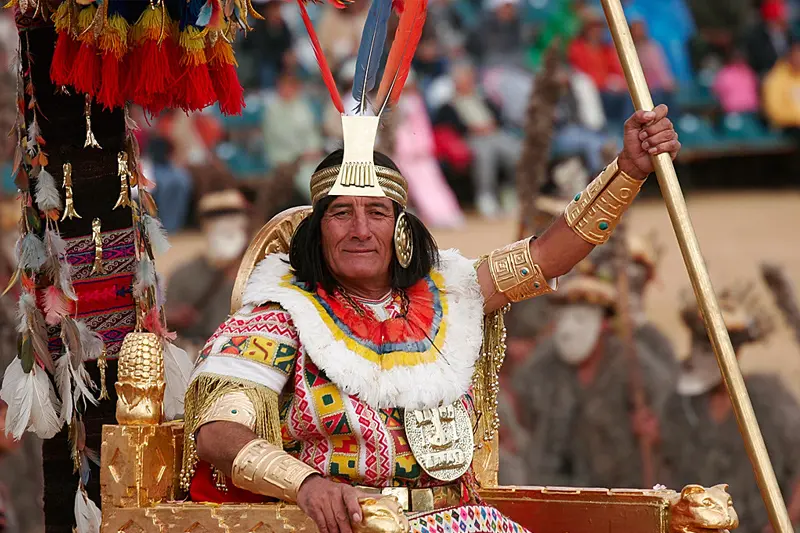
Each year, on June 24th, the city of Cusco becomes the stage for one of Peru’s most vibrant and historical events: the Inti Raymi Festival. Known as the Festival of the Sun, this celebration revives an ancient Andean tradition that honors Inti, the revered sun deity of the Inca religion. With its grand processions, colorful costumes, and elaborate rituals, the festival attracts thousands of spectators eager to witness the magic of this theatrical representation of Inca heritage.
What Is Inti Raymi?
In the time of the Inca Empire, Inti Raymi served as the most important religious celebration of the year. The term itself means “Festival of the Sun” in Quechua, the language of the Inca. It marked the winter solstice, the shortest day of the year in the Southern Hemisphere, and a turning point in the solar calendar.
Furthermore, this ancient festival was dedicated to the sun, considered the most vital god in the Inca religion. As agriculture depended heavily on sunlight, the ritual expressed gratitude and devotion to ensure bountiful harvests.
Historical Roots and Suppression
Originally, Inti Raymi was celebrated during the height of the Inca Empire, involving nine days of ceremonies, dances, and offerings. The Sapa Inca, or Inca Emperor, played a central role, acting as the living representative of Inti.
However, following the Spanish conquest, the Catholic Church and colonial authorities deemed the celebration pagan. In particular, Viceroy Francisco de Toledo officially banned the festival in the 16th century. As a result, it disappeared from public practice for centuries.
The Revival of Inti Raymi
Despite suppression, the memory of the Inti Raymi celebration persisted through oral tradition. In 1944, thanks to the efforts of historian Faustino Espinoza Navarro and local scholars, the festival was reimagined as a historical reconstruction.
Inspired by the chronicles of De la Vega, a mestizo writer who documented Inca customs, the modern version of Inti Raymi Festival in Cusco was born. Today, it blends ritual, performance, and cultural pride into a powerful celebration.
When and Where Does Inti Raymi Take Place?
The main events occur on June 24, though smaller activities begin days earlier. Three key locations within the city of Cusco serve as the backdrop:
Qorikancha (Temple of the Sun): The opening ritual takes place at this sacred site, once the most important temple in the Inca religion.
Plaza de Armas: Once the heart of the empire, the Inca Emperor delivers a symbolic address here, recreating his divine connection.
Sacsayhuamán: A massive stone fortress just outside the city, it hosts the main theatrical representation, involving music, chants, dances, and rituals.
Moreover, the festival draws visitors from all over the world, adding a contemporary vibrance to an ancient tradition.
The Theatrical Representation and Its Symbolism
Unlike modern religious processions, Inti Raymi is a complex blend of ceremony and performance. At Sacsayhuamán, hundreds of actors portray priests, nobles, warriors, and the Sapa Inca himself.
The performance begins with ritual offerings, including symbolic sacrifices (not real animals) meant to honor the Sun God. Participants wear traditional attire, many handwoven from alpaca wool and decorated with gold accents.
In addition to its aesthetic beauty, the festival underscores the spiritual bond between the Andean people and nature. It reflects a worldview in which balance, reciprocity, and reverence shape daily life.
Inti Raymi and the Modern Identity of Cusco
Without question, the Inti Raymi Festival plays a crucial role in reinforcing Cusco’s cultural identity. Though modernized, it still reflects the grandeur and devotion that characterized the Inca Empire.
Also, for many Peruvians, especially Indigenous communities, the event is more than a tourist attraction. It is a celebration of resilience, heritage, and pride in ancestral roots.
Important Dates and Travel Tips
While the main event takes place on June 24, visitors should consider arriving a few days earlier to enjoy other festivities. Around June 21st, the actual winter solstice, cultural events, exhibitions, and parades begin in the city of Cusco.
If you’re planning to attend, keep the following in mind:
Book accommodations early: Hotels fill quickly due to high demand.
Arrive early at venues: Especially at Sacsayhuamán, where space is limited.
Wear layers: Even in June, temperatures in Cusco can vary drastically between day and night.
Respect local customs: While photographing the event is allowed, it’s essential to remain respectful of its spiritual significance.
Legacy of the Inca Empire in the Festival
Throughout the event, the legacy of the Inca Empire is celebrated through symbols, language, and ritual acts. The presence of the Inca Emperor, his golden throne, and the sacred fire all serve to reenact the empire’s cosmology.
Even the layout of Cusco—once designed in the shape of a puma—echoes in the paths taken during the festival. Thus, the Inti Raymi Festival in Cusco reconnects the city to its glorious past.
Why June 24th?
Although the winter solstice typically falls on June 21st, the festival is held on June 24 to align with local customs and allow more people to participate. This date also honors Saint John the Baptist, providing a point of convergence between Andean and Christian traditions.
Therefore, June 24th embodies both the historical significance of the Festival of the Sun and the blending of cultures that defines modern Peru.