

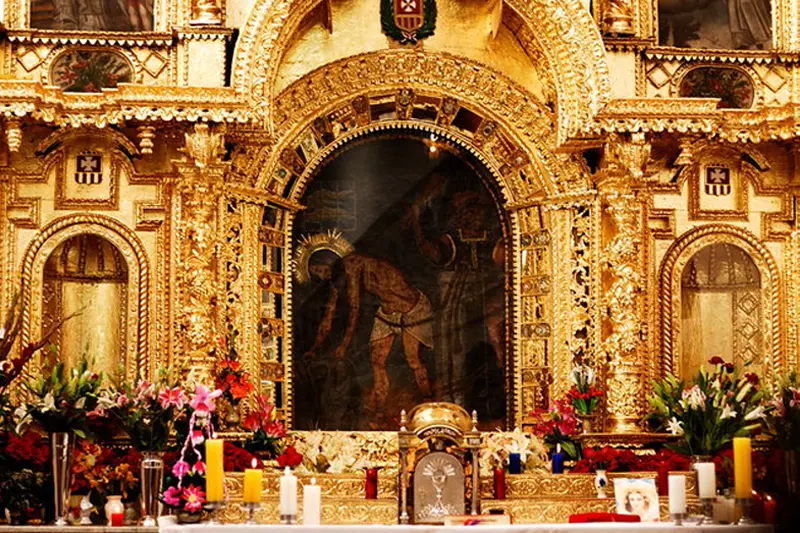
In the spiritual heart of the Andes, a sacred site draws thousands of pilgrims every year. The Lord of Huanca in Cusco is more than a religious image—it’s a powerful symbol of healing, faith, and divine connection. Devotees from across Peru and beyond visit this revered sanctuary, especially during the days leading up to September 14th, a date marked by great fervor and devotion.
The History of the Lord of Huanca (Señor de Huanca)
The origins of the Señor de Huanca trace back to the early 18th century, during colonial Peru. At that time, a humble Indigenous man named Diego Quispe worked in the district of San Salvador, in the province of Calca. According to tradition, Diego was unjustly punished by his employer and fled into the mountains, hiding in a cave.
There, in a moment of anguish and prayer, he witnessed a miraculous vision of Jesus Christ bleeding, a moment that transformed his life and the lives of thousands who would later follow his path.
The First Apparition: Diego’s Vision
One fateful night Diego escaped his master’s cruelty and took refuge deep within the Andes. Isolated and wounded, he turned to prayer, seeking divine guidance. It was in that solitude that Jesus Christ, that God chose to live, appeared to him in radiant form, bleeding and full of compassion.
This was the first recorded apparition and would become the cornerstone of the Huanca devotion.
The Second Apparition and the Painting
Soon after the first event, Diego Quispe returned to the city of Cusco and told his story to a man named Don Pedro Valero, a known artist of the time. Inspired by Diego’s account, Valero ventured to the cave and painted a mural of the vision on the rock face. This image, imprinted directly onto the stone, is considered sacred and became the heart of the sanctuary.
Over time, pilgrims and believers began to gather around this holy site, eventually transforming it into what is now known as the Sanctuary of the Lord.
Where Is the Lord of Huanca Located?
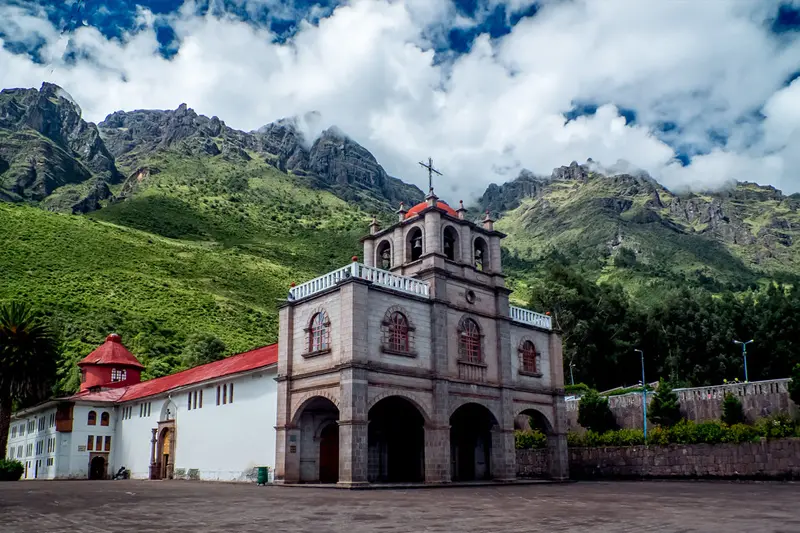
Today, the Lord of Huanca is located in a peaceful natural setting, about 50 km from the city of Cusco. More precisely, the sanctuary is located in the district of San Salvador, within the province of Calca. The site lies 3,100 meters above sea level, offering a serene environment ideal for spiritual reflection.
Additionally, the sanctuary sits amidst eucalyptus forests and gentle hills, enhancing its atmosphere of tranquility. Its stone chapel and the mural of Jesus Christ bleeding continue to inspire awe among visitors.
How to Get to the Lord of Huanca Sanctuary
There are several ways to reach the Sanctuary of the Lord. The most common route begins in the city of Cusco, from where travelers can drive or take a bus heading towards San Salvador.
The sanctuary is located about 48 km from Cusco and can be reached in approximately 1.5 to 2 hours by car.
From the town of San Salvador, a winding but well-marked path leads directly to the site.
For those seeking a more traditional experience, many pilgrims choose to walk from Cusco or nearby towns as a form of penance or devotion.
Visiting the Sanctuary: What to Expect
While visiting the sanctuary, pilgrims often engage in various rituals. These include lighting candles, attending mass, and bathing in the natural springs found near the site. The water is believed to possess healing properties and is often used in water treatment for five days.
Beyond religious services, visitors can explore the surrounding area, enjoy the peaceful landscape, and reflect in silence. Local vendors also offer religious items, food, and traditional herbal remedies.
Tips and Advice for First-Time Visitors
Planning your pilgrimage or spiritual journey to the Señor de Huanca requires a few considerations:
Best Time to Visit: While open year-round, the largest gatherings occur in the week leading up to September 14th.
Altitude Preparation: At 3,100 meters above sea level, it’s advisable to spend a day or two in Cusco beforehand to acclimate.
Footwear: Bring comfortable walking shoes, especially if hiking the final stretch.
Stay Hydrated: Carry water, particularly if you plan to walk from San Salvador.
Respect the Sanctuary: Refrain from loud conversation and photography inside the chapel unless permitted.
The Significance of September 14th
The most important date on the Huanca calendar is undoubtedly September 14th. On this day, thousands gather in a vibrant show of great fervor and devotion. The roads fill with pilgrims, many traveling on foot for hours, even days, as a promise or in gratitude for a miracle received.
Church services, music, and traditional processions make the event both solemn and joyful. Visitors witness firsthand the cultural and spiritual depth that makes the Lord of Huanca in Cusco so special.
Pilgrimage and Modern Faith
Despite changing times, the pilgrimage to the Lord of Huanca remains a powerful expression of living faith. For many, it is a chance to reconnect with their roots, seek healing, or fulfill a family tradition.
Groups from the province of Calca, and even from abroad, return every year to honor the image of Jesus Christ that God chose to live among the mountains. The sanctuary continues to unite generations through shared belief and spiritual renewal.


