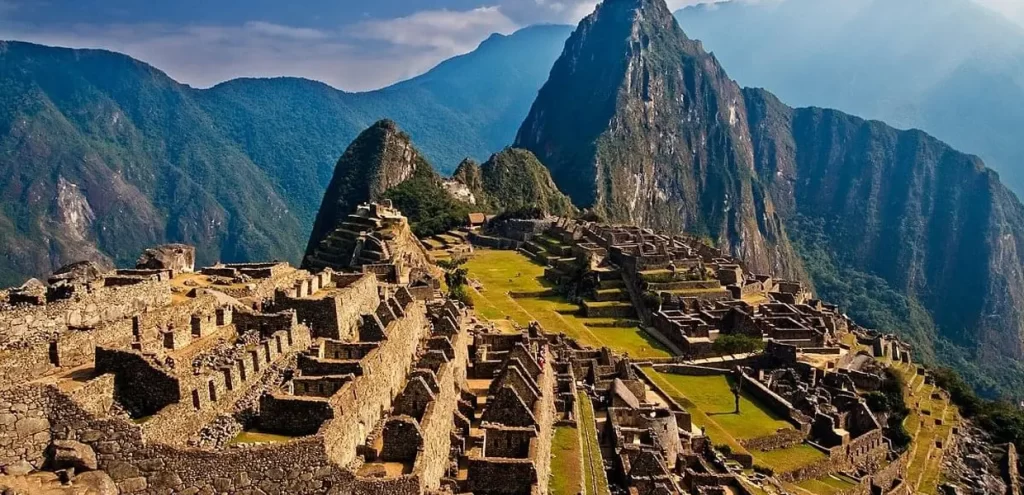
The Principal Temple in Machu Picchu stands as one of the most important ceremonial structures within the ancient Inca citadel. Located in the heart of the Sacred Plaza, this religious building reveals the high level of architectural mastery and spiritual devotion that defined the Inca civilization. Though often overshadowed by more popular landmarks like the Temple of the Sun or the Sun Gate, the Main Temple is essential for understanding the spiritual backbone of this UNESCO World Heritage Site.
What Is the Principal Temple in Machu Picchu?
Within the sector of Machu Picchu known as the Sacred Plaza, the Principal Temple emerges as a large, open, U-shaped structure constructed with massive carved stone blocks. It’s widely believed that the building served religious functions, potentially hosting rituals dedicated to Inti, the Sun God, or the creator deity Viracocha. The site reflects the importance the Incas placed on religion, astronomy, and alignment with celestial bodies.
Every architectural detail within the temple—especially the precision of the stone walls and the orientation of the rear wall—was executed with symbolic purpose. These blocks of stone, shaped with extraordinary skill, align with the Incas’ belief in sacred geography and harmony between nature, the cosmos, and humankind.
Location and Spiritual Importance
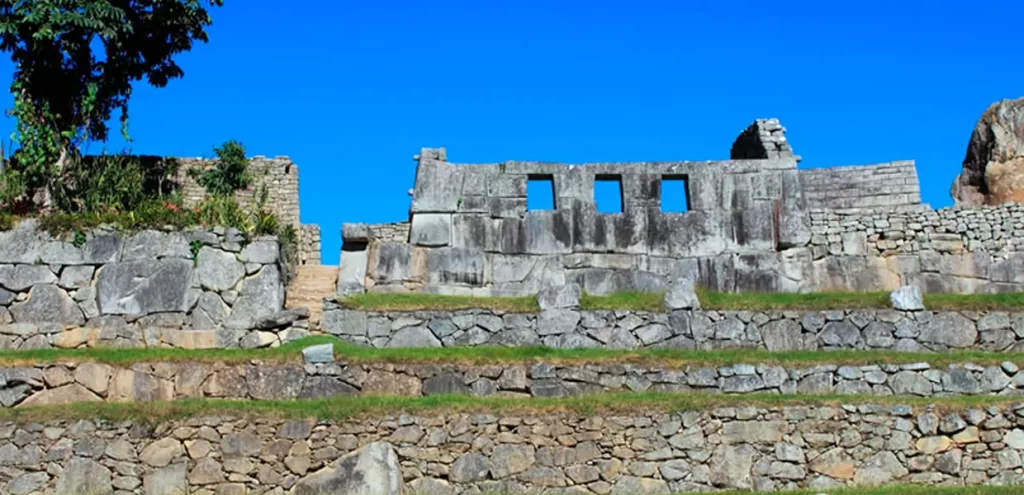
Positioned prominently in the Sacred Plaza, the temple was likely the focal point of major religious ceremonies. To its sides lie the Temple of the Three Windows and the House of the High Priest, forming a sacred triad of spiritual importance. This spatial layout wasn’t coincidental. Rather, it reflects the hierarchical and cosmological thinking of the Inca elite.
Importantly, the Principal Temple faces toward the Sun Gate, the original entrance used by travelers arriving from the Inca Trail. This orientation underscores the temple’s possible role in rituals welcoming the sun or greeting new arrivals during key ceremonial dates like solstices.
Architectural Features of the Principal Temple
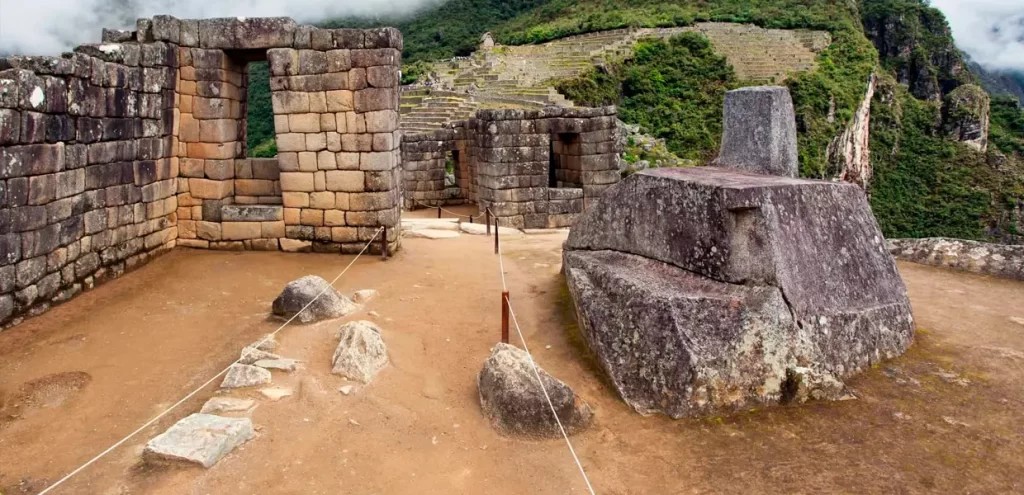
One of the most remarkable aspects of the temple of Machu Picchu is its construction technique. Each carved stone fits seamlessly with the next, without the use of mortar. This style, known as ashlar masonry, was reserved for structures of high spiritual or political value.
The temple consists of three main walls—two lateral sides and a tall rear wall—which together form a U-shaped plan. The stone walls are made from carefully finely carved granite blocks, placed in perfect alignment to withstand earthquakes. The lower stones are massive, anchoring the structure, while the upper stones are more uniform in size and shape, offering both stability and beauty.
Trapezoidal niches line the walls—likely used to house idols or ceremonial offerings. On the rear wall, six protruding stone pegs can still be seen. These may have supported ritual textiles or ceremonial items during specific rites.
Damage and Preservation
Though most of the temple remains intact, one corner of the rear wall has shifted due to subsidence—likely caused by rain and seismic activity over the centuries. Despite this damage, the temple continues to impress visitors with its symmetry, scale, and symbolic resonance.
Preservation efforts focus on maintaining the stability of the structure without altering its historical integrity. Fortunately, the blocks of stone used in its construction were designed to flex slightly under pressure, giving the temple an inherent resilience that has protected it for more than 500 years.
Connection to Other Sacred Structures
No visit to the Inca citadel is complete without exploring its sacred architecture as a whole. The Principal Temple is closely related to the Temple of the Sun, located lower down on the site and dedicated to solar observations. While the Temple of the Sun is circular and built over a natural cave, the Main Temple is rectangular and elevated—likely emphasizing different cosmological meanings.
Together, these temples reflect the Inca duality of hanan (upper world) and hurin (lower world), symbolizing balance between the spiritual and earthly realms. Nearby, the Southern Cross constellation may have been observed during rituals, reinforcing the link between the heavens and the sector of Machu Picchu where religious ceremonies took place.
Role in Inca Society
For the Inca elite, religion was inseparable from governance. Temples like the Principal Temple Machu Picchu were not only spiritual hubs but also political symbols. High priests, nobles, and astronomer-priests likely gathered here during key calendar events to make offerings, perform sacrifices, and interpret omens.
The presence of the temple in such a central location reinforces Machu Picchu’s function as a ceremonial city rather than merely a royal estate. From here, messages could be sent, rituals could be seen, and beliefs could be reinforced across the Inca citadel and beyond.
What Visitors Can Expect
As a visitor to Machu Picchu, you’ll find the Principal Temple in the upper religious sector of the site. It’s often included in guided tours and usually approached after viewing the Sun Temple and Royal Tomb. Though the temple is not accessible for interior visits, you can observe its construction up close from a designated pathway that allows clear views of the carved stone walls and niches.
Photography is encouraged, especially in the morning light when the sun casts dramatic shadows across the stone walls. Don’t miss the opportunity to study the subtle slope of the floor, which helped drain rainwater and added stability—a clear sign of the Incas’ engineering genius.
Interpreting Its Legacy
The Principal Temple Machu Picchu continues to provoke questions among archaeologists and historians. Its scale, location, and craftsmanship all suggest it was a centerpiece of the city’s spiritual life. Yet, its exact rituals remain unknown.
Speculation abounds regarding its purpose. Some suggest the temple was used during solstices and equinoxes; others believe it housed a sacred idol or mummy of a powerful ruler. Whatever its true use, the temple remains a silent witness to centuries of devotion and spiritual expression.
Visiting the Principal Temple in Machu Picchu in 2025
If you’re planning to visit Machu Picchu in 2025, the Principal Temple should be high on your list. Given recent crowd control policies, make sure to select a circuit that includes access to the Sacred Plaza. Most guided tours follow Circuit 2, which passes by this area and offers panoramic viewpoints of the temple.
Arriving early enhances the experience, especially if you want to capture the morning sun illuminating the stone walls. Be prepared for a short uphill walk and take time to absorb the serene atmosphere that still lingers in this ancient ceremonial space.

Why the Principal Temple Still Matters?
The Principal Temple Machu Picchu is not just a structure of finely fitted stones—it’s a key to understanding the Inca worldview. Its careful placement, celestial orientation, and harmonious design represent the balance the Incas sought between earth, sky, and spirit.
Standing before its weathered stone walls, visitors gain a deeper appreciation for the ingenuity and devotion that built this awe-inspiring city in the clouds. As part of the broader narrative of the Inca citadel, the Principal Temple invites reflection, wonder, and admiration for a civilization that continues to inspire the world.