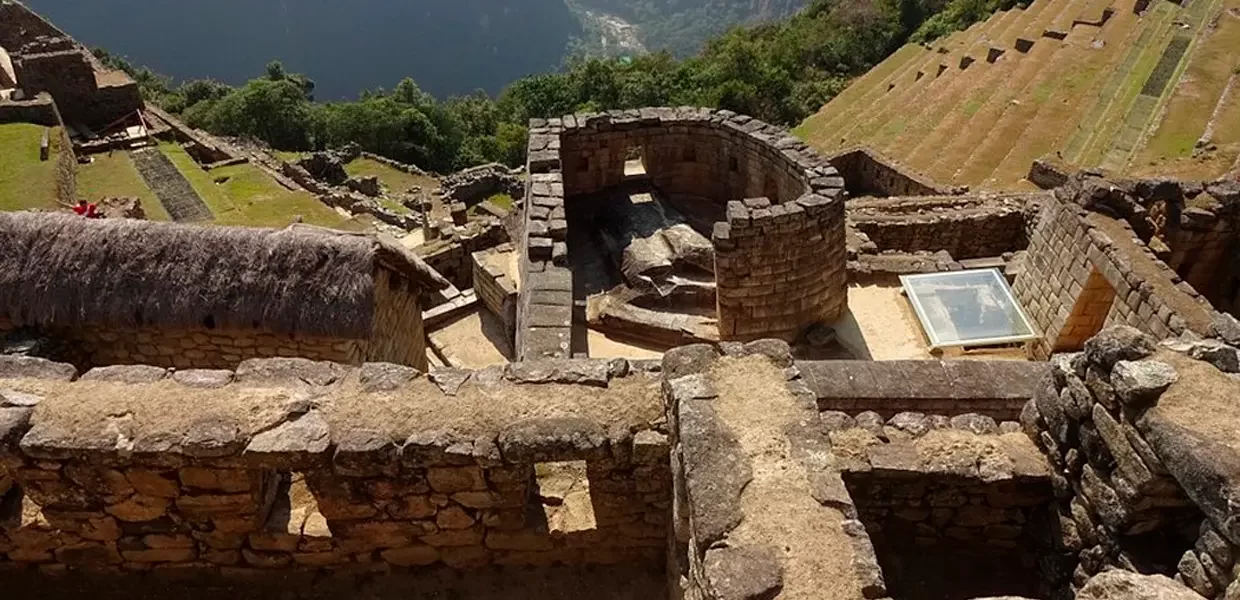
Among the many wonders of Machu Picchu, few monuments stir the imagination and spiritual curiosity as much as the Temple of the Sun. Known in Spanish as El Templo del Sol, this sacred structure reflects the brilliance of Inca architecture, astronomy, and religious practice, making it one of the most important sites in the entire citadel.
This guide explores everything you need to know about the Temple of the Sun at Machu Picchu, including its design, purpose, cultural meaning, and what it reveals about the Inca civilization and its worship of the Sun God Inti.
What Is the Temple of the Sun at Machu Picchu?
The Temple of the Sun is a finely crafted religious structure located in the heart of Machu Picchu’s religious sector. It was used for ceremonies and offerings to Inti, the sun god, who was the most important deity in the Inca religion.
This building is one of the most impressive examples of Inca architecture, featuring finely polished stonework, astronomical alignment, and ritual function.
Where Is the Temple of the Sun Located?
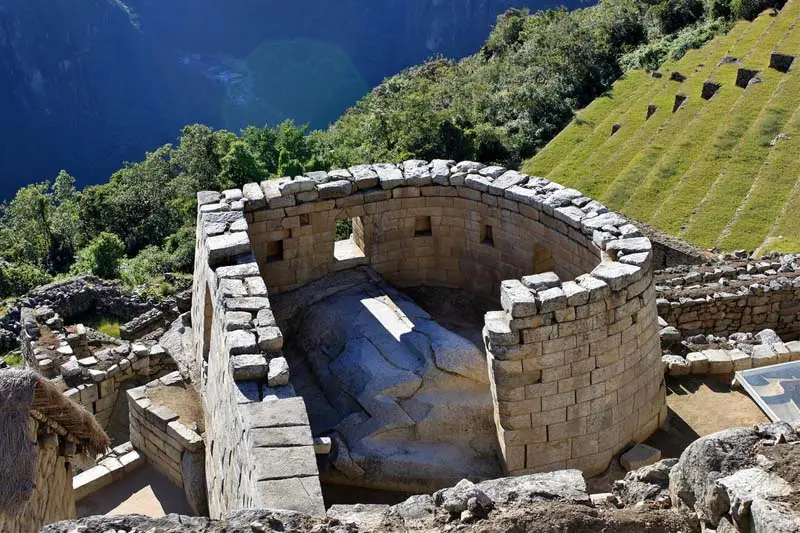
The temple is located on a small promontory just above the Royal Tomb in the central part of the citadel. The spot is both strategic and spiritual: it offers unobstructed views of the sun at Machu Picchu, especially during key celestial events like the winter solstice.
Its elevated position reinforces its importance as a ceremonial and sacred site within the broader archaeological site.

How Is the Temple Built?
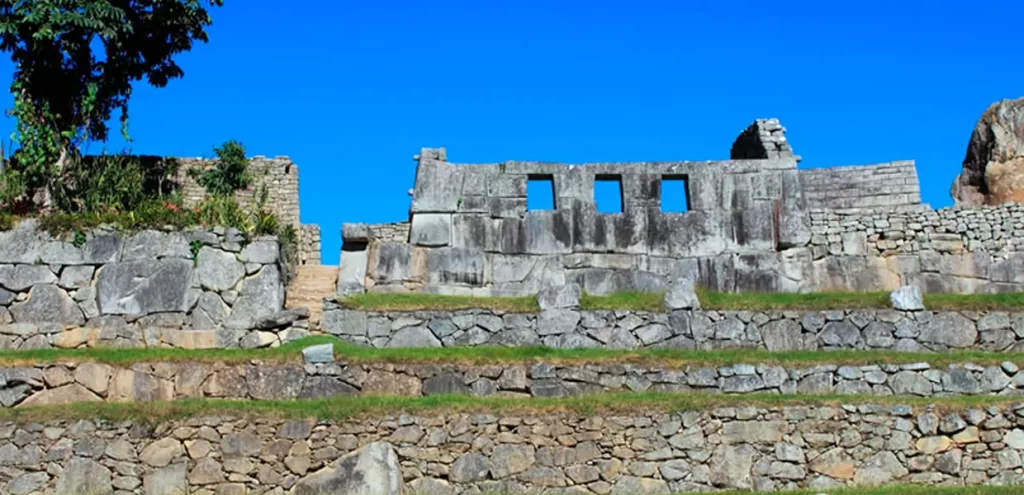
The temple is built with massive stones that fit together with extraordinary precision—without the use of mortar. This seamless construction is characteristic of Inca engineering, which could withstand earthquakes and time itself.
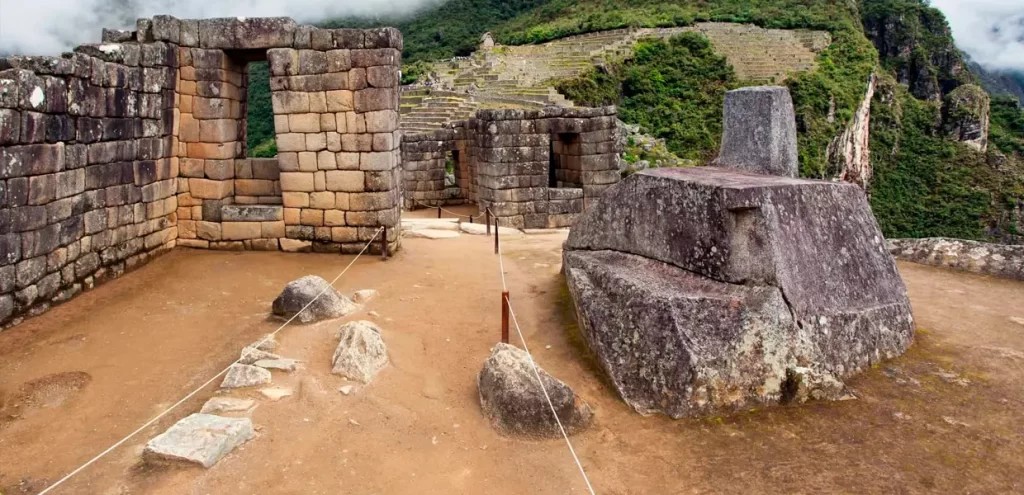
One of its most iconic features is the semi-circular outer wall, which curves elegantly around a solid rock base. Inside the temple are trapezoidal windows, another hallmark of Inca architecture, that were aligned with solar events to track the movement of the sun.
Semi-Circular Structure
The semi-circular design was not purely aesthetic. It was symbolic of the sun’s arc and practical for monitoring sunlight during different times of the year. This curvature is rare in Inca construction and is usually reserved for important religious ceremonies or high-status buildings.
Natural Cave Beneath the Temple
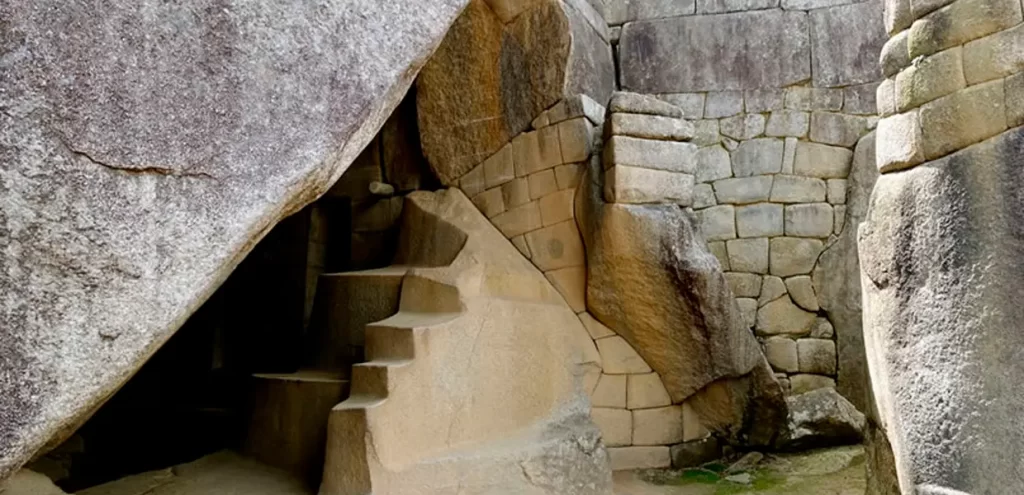
Directly beneath the Temple of the Sun is a natural cave, which many scholars believe functioned as a tomb or ceremonial chamber. Known as the Royal Tomb, this chamber is carved into the bedrock and may have been the final resting place of an Inca emperor or high-ranking Inca priests.
The Role of Inca Priests and Ceremonies
The Temple of the Sun was not simply a place of quiet reflection—it was an active center of religious ceremonies. Inca priests conducted rituals during significant astronomical events, offering coca leaves, chicha (corn beer), and sometimes even animal sacrifices to honor Inti.
During the winter solstice, the priests would observe the first rays of sunlight entering the trapezoidal windows, a moment that signaled agricultural planning and spiritual renewal.
Alignment with Celestial Events
Perhaps the most fascinating aspect of the Temple of the Sun at Machu Picchu is its astronomical precision. The windows are aligned in such a way that during the June solstice—the shortest day of the year in the Southern Hemisphere—the sunlight streams directly through and lands on a sacred rock within the temple.
This alignment shows how the Incas used architecture not only to honor their gods but also to create calendars and agricultural cycles.
Symbolism and Spiritual Purpose
To the Incas, the Sun God Inti was not just a celestial being but the spiritual father of the Inca emperor himself. By building such a grand temple, the civilization was showcasing the Incas’ devotion, power, and connection to the divine.
The temple served as a bridge between earth and sky—a place where rituals ensured harmony between humanity and nature.
Architectural Marvel in a Natural Landscape
The Temple of the Sun stands as an architectural marvel, not only because of its design but because of how it interacts with its environment. The temple is built into the landscape rather than imposed upon it, respecting the sacredness of nature—another key principle in Andean belief systems.
Its proximity to the natural cave and its elevated, circular layout reinforce its role as a spiritual nucleus within the archaeological site.
Differences Between the Temple of the Sun and Other Structures
While many buildings in Machu Picchu are rectangular and functional, the Temple of the Sun stands apart in terms of:
| Feature | Temple of the Sun | Typical Structure in Machu Picchu |
|---|---|---|
| Wall Shape | Semi-circular | Rectangular |
| Stonework Quality | Finest polished ashlar masonry | More utilitarian |
| Alignment | Solar event-oriented | Practical (housing/storage) |
| Purpose | Ceremonial and astronomical | Residential or administrative |
| Location | Elevated, central, near Royal Tomb | Spread throughout the citadel |
How to Visit the Temple of the Sun
While visiting Machu Picchu, all travelers pass through Circuit 1 or 2, which include the Temple of the Sun as one of the major highlights. However, you cannot enter the interior of the temple itself—visitors observe from above to protect the structure.
🎫 You don’t need a special ticket for the Temple of the Sun, but it’s part of the circuits that include the upper ceremonial area.
Best Time to Visit the Temple of the Sun
For the clearest views and best lighting for photography, the dry season (May to September) is ideal. If you’re specifically interested in solar alignments, consider visiting during the winter solstice on June 21st, when the temple’s design reveals its full astronomical purpose.
Quick Facts About the Temple of the Sun Machu Picchu
Built: Likely in the mid-15th century during the reign of Pachacuti
Material: Ashlar granite stone with interlocking joints
Purpose: Worship of Inti, astronomical observation, elite burial
Features: Semi-circular wall, trapezoidal windows, altar rock
Located above: The Royal Tomb and natural cave
Why the Temple of the Sun Still Matters Today
The Temple of the Sun is more than a ruin—it’s a testament to the Inca civilization’s genius. From spiritual beliefs to agricultural planning, this temple encapsulates everything we admire about their culture: ingenuity, harmony with nature, and deep cosmology.
Its preservation within Machu Picchu ensures that future generations can continue showcasing the Incas and learning from their legacy.