What is Pachamama Day Celebrated?
🌎 Undoubtedly, Pachamama Day stands out as one of the most significant celebrations in Andean culture. Every year on August 1st, people across Peru, Bolivia, Ecuador, and northern Argentina honor Pachamama, the goddess of the Earth, through ceremonies and rituals. This ancient tradition comes from Inca mythology, where the Earth was revered as a living entity that provides food, shelter, and life itself.
🙏 Clearly, Pachamama Day is not just about gratitude but also about reciprocity. Communities offer challa (a ritual offering) to ensure fertility, good harvests, and protection. Moreover, this festivity serves as a reminder to respect nature and maintain harmony between humans and the environment. Additionally, it reinforces the importance of sustainability and ecological awareness.
Who Celebrates the Day of the Pachamama?
🌍 Without a doubt, Pachamama Day unites indigenous Andean communities, but its influence reaches far beyond these regions. In recent years, people worldwide have embraced the tradition, recognizing the importance of environmental preservation and sustainable living.
✨ Importantly, the festival holds special meaning for Quechua and Aymara peoples, who continue to uphold their ancestors’ traditions. In addition to this, governments and local organizations support the celebration, promoting cultural awareness and tourism. Furthermore, many environmental activists have adopted the celebration as part of their efforts to promote ecological responsibility.
What Does Pachamama Mean?
🍃 Clearly, Pachamama is a Quechua word that translates to “Mother Earth.” The term combines “Pacha,” meaning universe, world, or time, and “Mama,” meaning mother. This divine figure embodies fertility, abundance, and the interconnectedness of all living beings.
🌱 Unlike other deities in the Andean pantheon, Pachamama constantly influences daily life, agriculture, and weather patterns. Additionally, she is both a nurturing and punishing force, rewarding those who respect nature while bringing misfortune to those who exploit it. Moreover, her significance has transcended cultural boundaries, inspiring eco-conscious movements around the globe.
How is Pachamama Day Celebrated?
Rituals and Offerings
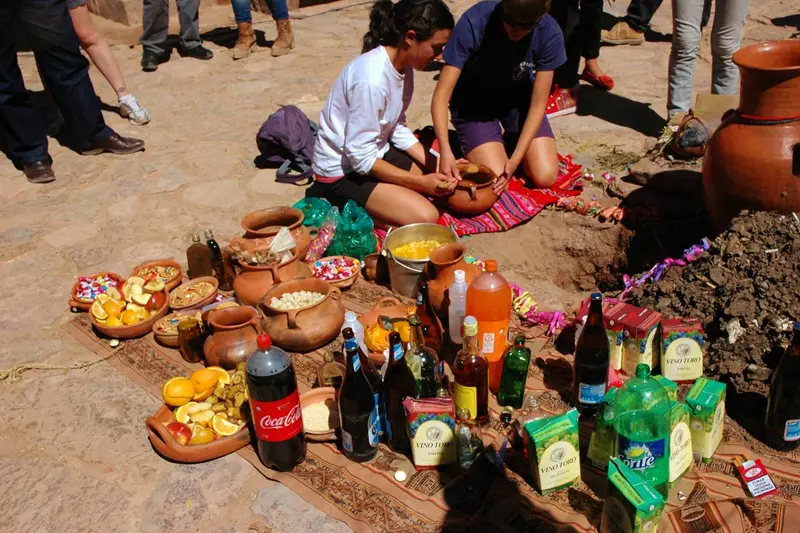
🔥 First and foremost, the “Pago a la Tierra” (Payment to the Earth) stands as the most traditional ceremony held on Pachamama Day. Families and communities gather to bury offerings, which typically include coca leaves, chicha (fermented corn drink), wine, food, and sweets. These gifts symbolize gratitude and a plea for blessings in the coming year.
🍽️ Furthermore, a ritual known as “La Pachamama está de hambre” (Pachamama is hungry) takes place, where people place food on the ground to “feed” Mother Earth. Apart from this, many abstain from consuming alcohol or engaging in negative behavior as a sign of respect. Additionally, communities organize traditional music and dance performances to celebrate the day with joy and unity.
Inca Mythology
🏔️ It should be noted that Pachamama’s role in Andean beliefs remains deeply connected to Inca mythology. The Incas structured their spiritual world into three realms: Hanan Pacha (upper world), Kay Pacha (earthly world), and Uku Pacha (underworld). Each of these realms had different gods, with Pachamama being the primary deity of Kay Pacha. Furthermore, these realms represented the balance between life, death, and the cosmos.
What Types of Gods Did the Incas Believe In?
🌞 The Inca civilization followed a polytheistic belief system, worshipping multiple deities that represented natural elements and cosmic forces. Moreover, these gods influenced daily life, agricultural practices, and even political decisions. Additionally, their reverence shaped the way the Incas interacted with the environment.
Hanan Pacha Gods (Upper World)
🔆 Hanan Pacha, meaning “the world above,” housed celestial gods, including:
Inti: 🌞 The Sun God, the most revered deity, considered the ancestor of the Inca rulers.
Mama Quilla: 🌙 The Moon Goddess, protector of women and marriage.
Illapa: ⚡ The God of Thunder, responsible for rain and storms.
Kay Pacha Gods (Earthly World)
🌿 Kay Pacha, or “the present world,” is where humans and animals reside. The most important deity here is Pachamama, who ensures fertility and sustenance. Additionally, the Incas worshipped:
Apu: ⛰️ The spirits of the mountains, believed to provide protection and guidance.
Mamacocha: 🌊 The Goddess of Water, essential for agriculture and life.
Uku Pacha Gods (Underworld)
💀 Uku Pacha, meaning “the world below,” was the realm of the dead and the spirits. Unlike the Christian concept of hell, this underworld was not necessarily a place of punishment. Gods of this realm included:
Supay: 👹 The God of Death and ruler of the underworld.
Ñusta: 👸 Spirits of deceased Inca princesses, believed to guide souls in the afterlife.
Final Thoughts
🌏 Above all, Pachamama Day serves as more than just a celebration; it reminds people of the Andean deep respect for nature and their spiritual connection to the Earth. The rituals performed on this day symbolize gratitude, balance, and the responsibility to preserve our environment. Whether in the Andean region or elsewhere in the world, honoring Pachamama provides a meaningful way to acknowledge the importance of Mother Earth and sustainability.
🌎 Indeed, embracing this ancient tradition allows people to foster a greater appreciation for the interconnectedness of life. By participating in Pachamama Day, individuals not only pay tribute to Andean heritage but also contribute to the global movement of environmental consciousness. Furthermore, recognizing Pachamama’s role in our lives encourages sustainable practices that benefit future generations.
🌱 Lastly, as climate change and environmental degradation continue to threaten the planet, remembering the values of Pachamama Day becomes even more crucial. Let us all take inspiration from this celebration and strive to live in harmony with nature. 🌿